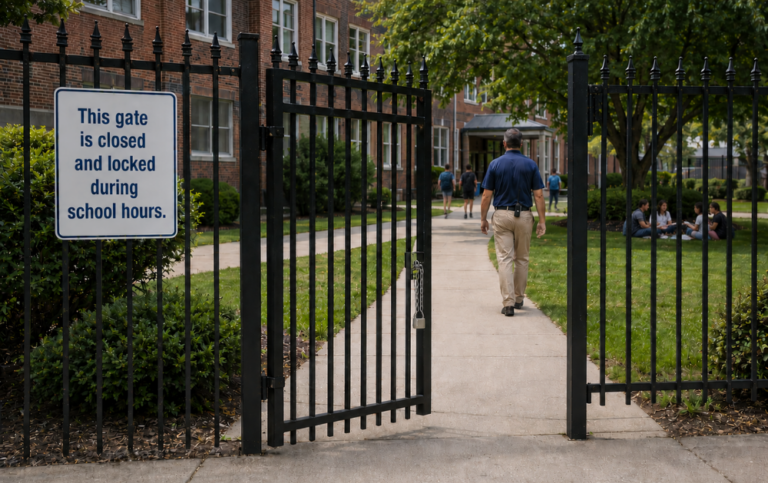
When people talk about school safety, the conversation often centers on what happens inside the school fence, the secured entrances, supervision, emergency plans, cameras, access control, and other layers of protection.
But every day, schools intentionally move students beyond those layers.
Students travel to competitions, field trips, performances, and other school-sponsored activities. The environment changes when students leave property owned, controlled, and maintained by the school.
The responsibility for student safety and the standard of care owed to students does not disappear at the school property line.
Throughout any given school day, there may be brief periods when student supervision falls below the expected standard of care. These lapses may last only a few minutes, but even a small window of inadequate supervision can create an opportunity for foreseeable harm and expose a school to significant liability.
In my area, I regularly see a local high school cross-country team training on a sparsely used public trail. There may be 50–60 student-athletes spread across a significant distance, with only three or four coaches running alongside different pockets of students.
From a student safety and risk management perspective, that raises an important question:
Does that level of supervision meet the standard of care reasonably expected for a school-sponsored activity? How can supervision be considered active when students are out of sight from the adults responsible for supervising them?
Active supervision should not become less important simply because an activity occurs beyond the school gates. When dozens of students are dispersed along an isolated trail, some inevitably become separated from the direct observation and immediate proximity of responsible adults.
This is not an argument against cross-country, athletics, field trips, or other off-campus opportunities. These experiences are an important part of education.
It is an argument for applying the same risk management principles and standard of care analysis beyond the school property line that we expect on campus.
Schools should evaluate off-campus locations, identify foreseeable hazards, establish appropriate supervision and student-accountability practices, maintain reliable communications, and develop procedures for emergencies away from campus.
If students are participating in a school-sponsored activity, the responsibility to provide reasonable care and appropriate supervision travels with them.